College of Life Science and Oceanography  ·  Shenzhen University, China

Home  /  Research

Heat & resilience

We experience temperature every day and every night. Temperature is a key environmental factor for humans, and as our planet warms, it is increasingly important to understand how human physiology changes and adapts to a warming planet. At the same time, both chronic and acute heat stress can damage cells and adversely affect physiology. Our lab is interested in how cells respond and adapt to heat stress. In particular, we use Caenorhabditis elegans as a model system to explore these questions. Over the past three years, we have found that tetraspanin-1 (TSP-1) is induced by chronic heat stress and plays an important role in the response and adaptation to heat stress; this pathway is independent of the HSF-1 pathway, providing new insight into heat response. However, TSP-1 is one plasma membrane protein that has been examined under heat stress, and many plasma membrane proteins have not yet been examined or studied in C. elegans exposed to chronic or acute heat stress. We are highly interested in these questions and continue to pursue research to answer them in relation to heat stress.
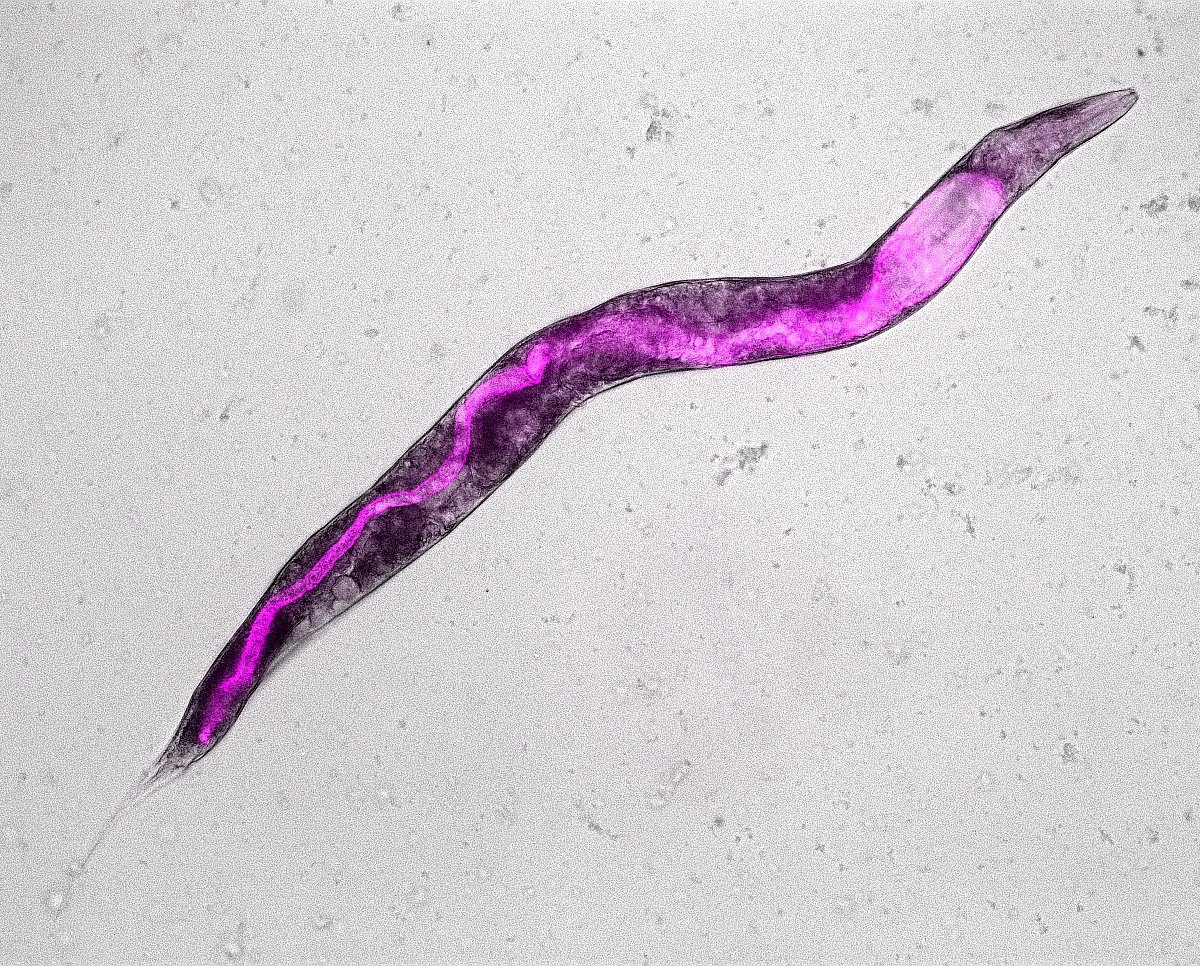
Caenorhabditis elegans after heat stress, merged brightfield and endogenous TSP-1 fluorescence
Fig. 1 — Caenorhabditis elegans after heat stress, merged brightfield and endogenous TSP-1 fluorescence

APOE4 toxicity regulation

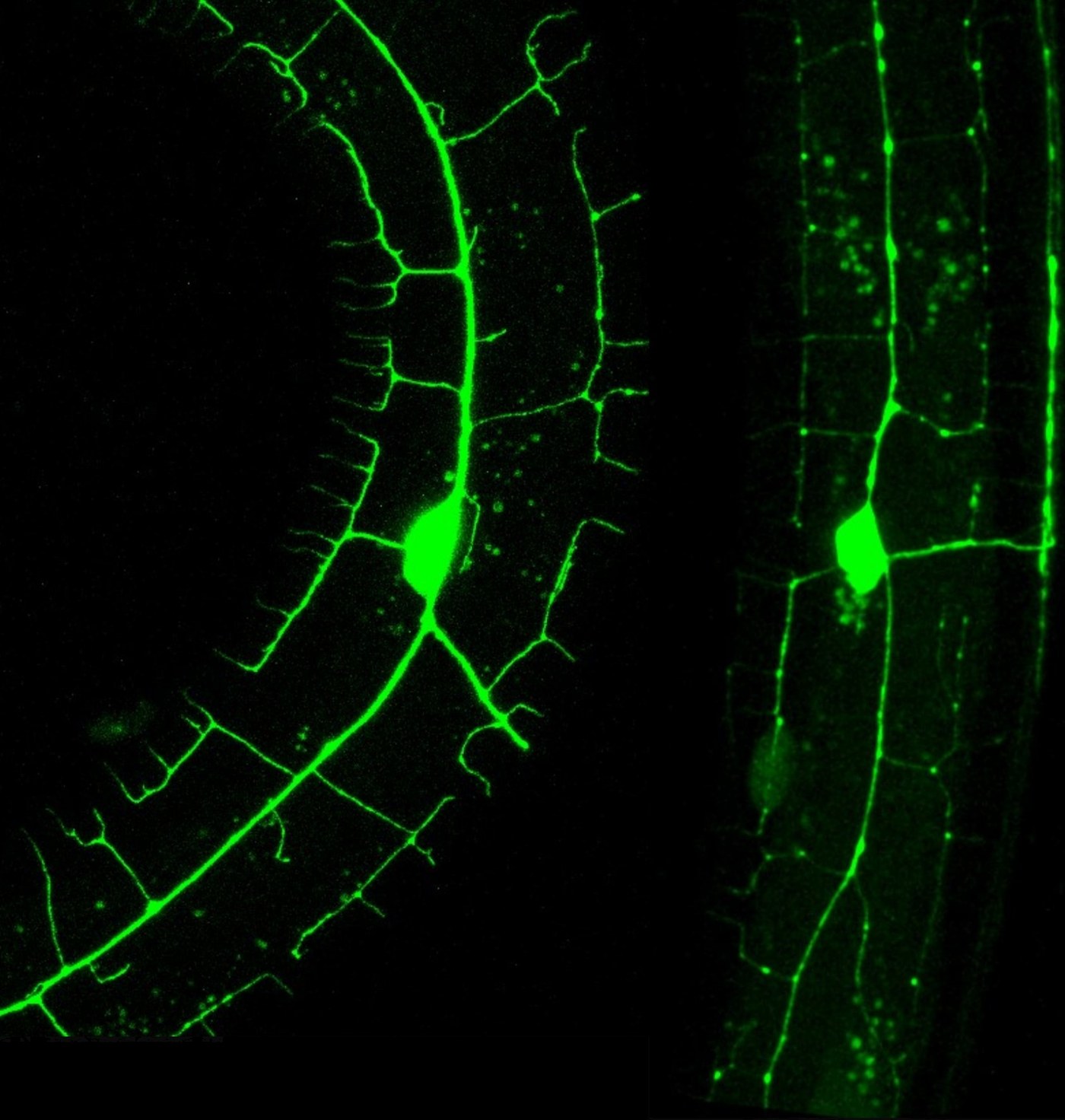
APOE4 is the strongest common genetic risk factor for Alzheimer's disease, yet how the protein harms living neurons remains not fully understood. Over the past three years, we used a model that expresses human APOE4 protein in C. elegans neurons under the control of a pan-neuronal promoter, and we examined PVD morphology. We found that APOE4 expression induced PVD abnormalities and unexpectedly found that vhl-1 deletion rescued this process, suggesting that VHL is a modifier of APOE4 toxicity.

However, many questions remain unanswered. We continue to be actively interested in these questions and are using integrated models to dissect these mechanisms in the lab. Our ultimate goal is to mitigate APOE4 pathology.

PVD neurons in Caenorhabditis elegans; left panel, a normal PVD neuron; right panel, a PVD neuron expressing human APOE4
Fig. 2 — PVD neurons in C. elegans: left panel, a normal PVD neuron; right panel, a PVD neuron expressing human APOE4